
I’ve always believed that a well-chosen coat should be more than just outerwear—it should be the foundation of your entire wardrobe. For me, that piece is a soft, oatmeal-coloured cashmere coat. It’s warm, elegant, and effortlessly chic, and once I invested in it, I knew I wanted to build everything around it. I’ve found that starting with a statement piece like this makes the whole process of curating a capsule wardrobe not only easier but more satisfying. I no longer feel pressured to buy everything at once; instead, I focus on pieces that complement this coat and help me look polished, no matter the season.

Why a Cashmere Coat Is the Perfect Capsule Foundation
When I first considered building a capsule wardrobe, I wasn’t sure where to begin. Then I stumbled upon a cream cashmere coat during a winter sale, and it felt like a turning point. Unlike cheaper, synthetic coats, this one has a natural drape, a soft texture, and a neutral hue that works with almost every colour in my closet. The quality means it lasts for years, and it’s one of the few items I genuinely consider an investment. Because it’s so versatile and timeless, it becomes the anchor of the entire wardrobe—every piece I choose must work with it. I’ve found that this kind of foundation reduces decision fatigue and helps me stay consistent with my personal style. It also makes it easier to transition from one season to the next without buying new outerwear every time.
Choosing the Right Cashmere Coat for Your Lifestyle
Not all cashmere coats are created equal, and picking the right one is crucial. I went through a few options before settling on a knee-length, single-breasted coat with a wide collar and subtle texture. I prioritised a fit that was slightly tailored but not restrictive, so I could layer easily. I also made sure it had a clean silhouette—nothing too bold or patterned—because I wanted it to blend with a variety of styles. Consider how you’ll use it: if you commute, you might want something slightly longer for extra warmth; if you wear it for dinners and events, a shorter, more streamlined cut could work better. The length, cut, and closure style (buttoned or wrap) all affect how it fits into your daily life. I also recommend checking the fabric weight—lightweight cashmere is great for transitional weather, while heavier versions are better for deep winter.
Choosing Neutral Colours That Complement Your Coat
One of the first decisions I made was to build my capsule around neutral tones that harmonise with my oatmeal cashmere coat. I chose a palette of soft greys, warm beiges, cream, navy, and chocolate brown—all of which blend seamlessly with the coat’s warm undertones. I avoided bold or overly saturated hues because they risked clashing or making the coat feel out of place. Instead, I focused on layered neutrals that create depth without overwhelming the look. For instance, I pair my coat with a deep navy turtleneck and cream trousers—it’s a look that feels cohesive and polished. I’ve also added a few pieces in warm taupe and soft terracotta, which complement the coat without competing with it. This approach makes it easier to mix and match, and it ensures every outfit feels intentional.
Layering for Seasonal Transition
One of the most practical benefits of a cashmere coat is how well it adapts to changing seasons. In the autumn, I layer it over a lightweight wool sweater and a silk blouse, tucking the blouse into high-waisted trousers. When the temperature drops, I add a thermal layer underneath—a fine-knit merino wool top works perfectly without adding bulk. I’ve learned that layering is about balance: you want enough warmth without looking over-dressed or bulky. I often wear a long-sleeved cotton shirt under a chunky knit sweater, then slip into the coat. In spring, I swap the heavier layers for a lightweight trench or a tailored blazer underneath, which keeps the look fresh. The key is to keep the base layers simple and structured, so the coat remains the focal point.
Creating a Minimalist Accessory Strategy
When your coat is already a statement piece, accessories should enhance, not dominate. I’ve built my accessory collection around minimalism: I stick to leather gloves, a soft scarf, and a structured tote bag in neutral tones. I’ve found that one good scarf in a complementary colour—like deep burgundy or soft grey—can instantly elevate a simple outfit. I avoid anything too ornate or trendy; instead, I focus on quality materials like wool, cashmere, or leather. A pair of classic black leather ankle boots, for example, can work with every outfit I create. I also keep jewellery minimal—small gold hoops, a delicate chain, and a simple watch—because anything more would distract from the clean lines of my coat. This approach keeps the overall look cohesive and timeless.
How to Style Your Coat for Work and Everyday Wear
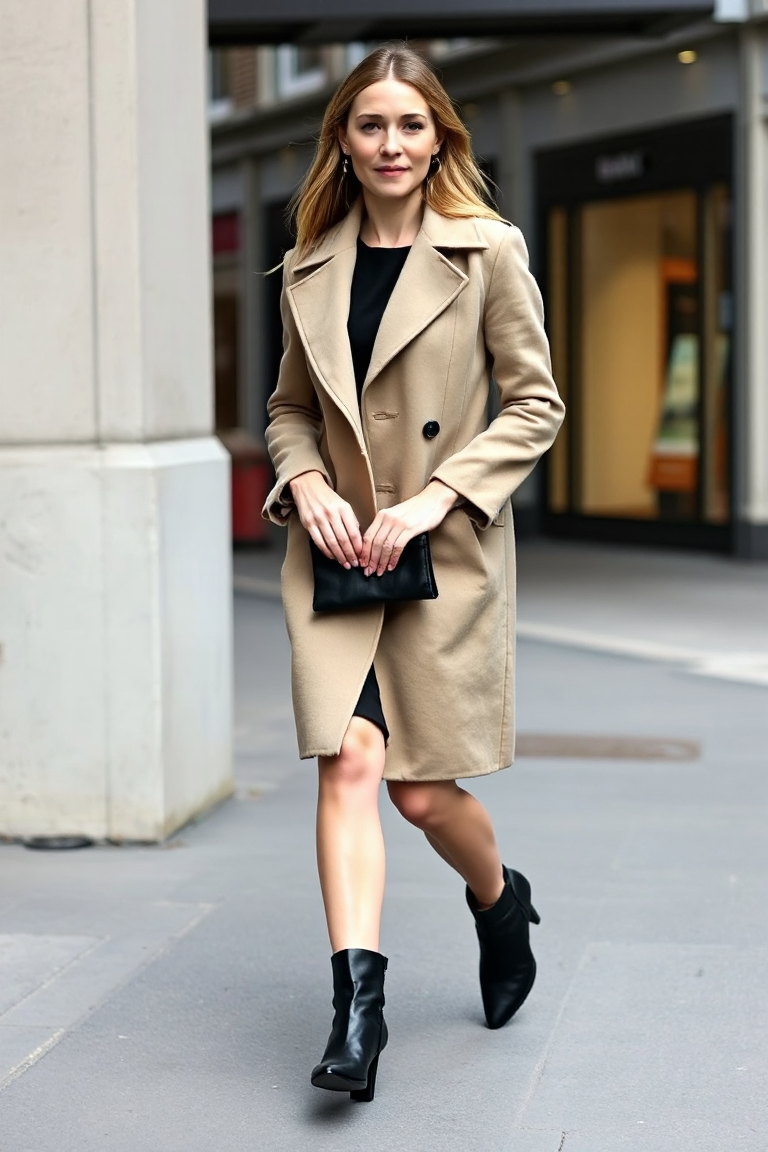
One of the biggest challenges when building a capsule wardrobe is creating versatile outfits that work across different settings. My cashmere coat has become a go-to for both the office and casual outings. For work, I pair it with a tailored wool skirt and a fitted turtleneck in a soft grey. It’s polished, professional, and still comfortable. When I’m running errands or meeting friends for lunch, I wear it over a relaxed linen shirt and slim-fit jeans—I’ve found that the coat instantly elevates even the most casual look. I’ve also experimented with layering it over a fine-knit cardigan and a midi skirt for a more relaxed, feminine vibe. The key is to keep the silhouette clean and the proportions balanced. This way, the coat doesn’t get lost in a cluttered outfit but remains the star.
Investing in Quality Basics That Last
Because the cashmere coat is the anchor of my wardrobe, I’ve focused on building the rest of my capsule with durable, high-quality basics. I’ve invested in a few key pieces: a cashmere-blend turtleneck, a pair of well-fitted tailored trousers, and a simple wool dress in a neutral shade. These items are designed to last, so I can wear them season after season without them losing shape or colour. I’ve found that choosing pieces with timeless silhouettes—like a straight-leg pant or a classic trench-style coat—makes it easier to mix and match. I also avoid fast fashion, even if it means spending more upfront. Over time, this approach has saved me money and reduced clutter, because everything in my closet feels essential.
Building a Capsule Wardrobe for Different Climates
Living in a climate with four distinct seasons has taught me that flexibility is key. In the winter, I layer my coat over a long wool coat and a thermal base layer. In the autumn, I wear it over a lightweight sweater and a trench. When spring arrives, I swap the heavier layers for a light scarf and a silk blouse. I’ve discovered that by adjusting the layers underneath, I can make the same coat work in every season without needing to buy new outerwear. In colder areas, I’ve added a thermal-lined version of the coat, which provides extra warmth without sacrificing style. The important thing is to think about how the coat functions in different environments—whether that means pairing it with boots for snowy days or sandals for milder weather.
Choosing the Right Footwear to Complete the Look
Footwear can make or break an outfit, especially when you’re styling around a statement coat. I’ve found that a pair of well-crafted ankle boots in black or brown is the most versatile option. They look polished with tailored trousers, chic with a midi skirt, and even stylish with jeans. I’ve also invested in a pair of classic leather loafers for more casual days, and a pair of suede boots for winter. I avoid anything too trendy or flashy—footwear should support the look, not distract from it. I also make sure the colours match my neutral palette, so everything feels cohesive. I’ve learned that comfort is just as important as style, so I prioritise footwear that’s both fashionable and practical for long days on my feet.
Why Less Is More in a Capsule Wardrobe
When I first started building my capsule wardrobe, I felt overwhelmed by all the options. But once I focused on a single anchor piece—the cashmere coat—the rest fell into place. I found that having fewer items but higher quality leads to more confidence and less stress. Instead of asking “what should I wear?”, I now ask “what can I pair with my coat?” It’s a mindset shift that’s made my mornings easier and my wardrobe more intentional. I’ve also noticed that I shop more consciously, avoiding impulse buys and sticking to items that truly fit my needs. This approach has made my style more sustainable and personal. I now feel less pressured to keep up with trends and more excited to wear what I love.
Styling Your Coat for Evening and Special Occasions
You’d be surprised how easily a cashmere coat can transition from day to evening. For a dinner date, I pair mine with a sleek silk slip dress and a pair of pointed-toe boots. I add a delicate gold necklace and a clutch in a deep burgundy shade for a touch of elegance. I’ve also worn it over a long-sleeved black dress with a belt to define the waist—this look is both sophisticated and flattering. The key is to keep the outfit streamlined and avoid over-accessorising. The coat adds a layer of luxury, so the rest of the outfit should feel refined, not busy. I’ve found that even a simple black turtleneck with a flowing skirt and the coat can make a strong evening statement. It’s all about balance and letting the coat do the talking.

Frequently Asked Questions
How do I care for a cashmere coat to make it last?
Wash it gently by hand or on a delicate cycle with a cashmere-specific detergent, and always air dry flat—never wring or tumble dry. Store it in a breathable garment bag or drawer, and use cedar hangers to prevent moths. I also rotate my coats to avoid constant wear and tear.
Can I wear a cashmere coat in the rain?
Not ideal—cashmere can be damaged by moisture. If you must wear it in damp weather, use a water-resistant spray and avoid prolonged exposure. For rainy days, I switch to a wool or cotton coat to protect my cashmere investment.
What’s the best way to layer under a cashmere coat?
Stick to lightweight, breathable layers like a fine-knit turtleneck or a silk blouse. Avoid bulky sweaters or thick fabrics that create bulk or pull the coat out of shape. Layering should feel warm and comfortable without compromising the coat’s elegant drape.